The reputation of Vanbrugh’s as architect is one of the most singular and unusual within British architectural history. He is, without doubt, the designer of some of the best-known English country houses. And yet at the same time these great houses don’t quite fit the wider patterns of English domestic architecture. Professor David Watkin wrote in his book English Architecture that with Castle Howard ‘the English baroque came of age overnight’. Blenheim followed, but by no means imitated or re-produced the visual and emotional impact of Castle Howard. Other works including Grimsthorpe and Seaton Delaval also demonstrate the originality and liveliness of Vanbrugh’s mind, his sense of history and his mastery of outline.
His collaboration with Hawksmoor has both added and subtracted from his international reputation as the debate rages about who designed what, or who was the better designer. But as others have remarked, the truth is, they were both brilliant and original figures. In the 18th century, the reputation of Vanbrugh’s individualistic style was at first swept aside by the rise of the Palladian Revival school, but towards the end of the century neo-classical architects began to appreciate anew the movement and mood of his creations. These were qualities admired by architects and artists, for instance, Robert Adam, in his Works of Architecture, and Sir Joshua Reynolds in his Royal Academy lectures, and then in the early 19th century by Sir John Soane who called him ‘the Shakespeare of architects’.
 The scholarly overview of his life and work by Karry Downes in the late 20th century helped a new generation appreciate the richness and imitative variety of Vanbrugh’s architecture, nor should we ignore the impact of the appearance of Castle Howard as the setting for 1981 television adaptation of Brideshead Revisited. Scholars and authors have continued to wrestle with his extraordinary story. This year the celebrations surrounding the tercentenary of his death are happily generating fresh interest in the energy, vitality and sheer artistry of his major country houses, with Charles Saumarez-Smith’s book the perfect guide.
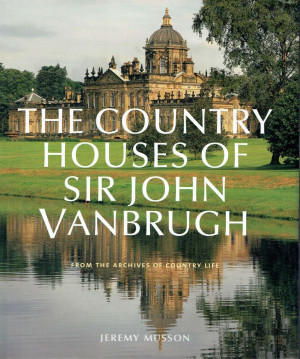
In 2008, I published The Country Houses of Sir John Vanbrugh from the archives of Country Life, a wonderful excuse to revisit some of these great houses and explore their story, not least through some of the greatest architectural photography ever taken. Imagine my delight, when in 2018 on a visit to Nithurst Farm in Sussex, the award winning design by Adam Richards Architects, the architect pulled my book from the shelf to show me the photographs which had played a part in the inspiration for the design of his own remarkable home nearly a decade later.
 Back to homepage