Using money raised by National Lottery players, The National Lottery Heritage Fund supports projects that connect people and communities with the UK’s heritage. Vanbrugh 300 is made possible with The National Lottery Heritage Fund. Thanks to National Lottery players, we have been able to develop a nationwide project that aims to broaden the awareness of Vanbrugh through special displays, free education programmes and lectures, throughout his tercentenary year in 2026.
As part of the Vanbrugh300 celebrations, a series of free lectures will be presented at six of his finest creations; Blenheim Palace, Castle Howard, Grimsthorpe Castle, Kimbolton Castle, Seaton Delaval Hall and Stowe House.
The VANBRUGH 300 Lecture Series – made possible by the National Lottery Heritage Fund and presented by The Georgian Group – will explore the many areas of Vanbrugh’s fascinating life and astonishing legacy. Variously described as a Whig, a wit and a wag, Vanbrugh makes an alluring subject for the lectures, which will be presented in several ways, ranging from ‘in conversation’ evenings, panel discussions and traditional talks, free to attend.
Find out more below.

Blenheim Palace
Thursday 7 May - Vanbrugh Panel Discussion
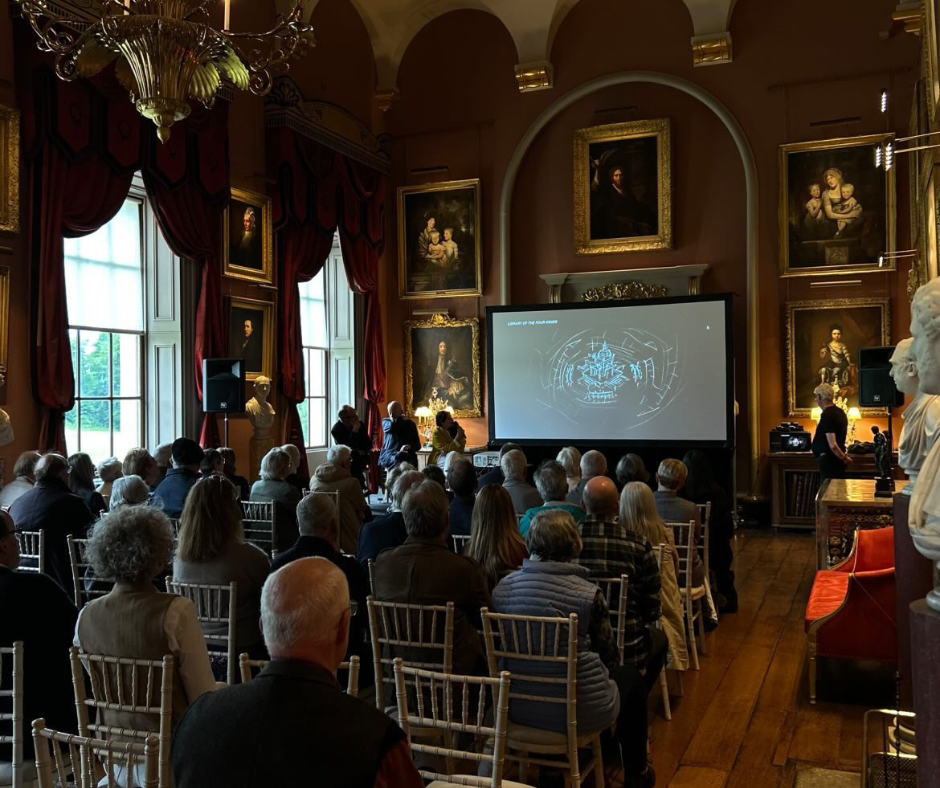
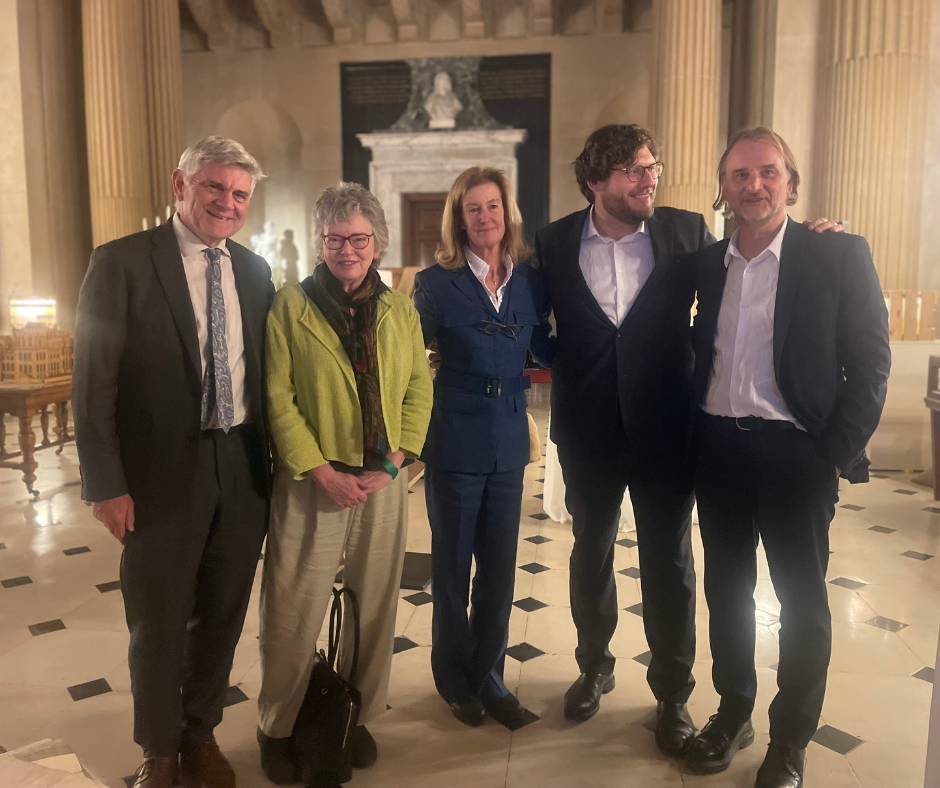
Blenheim Palace’s evening lecture in the Long Library featured Lady Henrietta Spencer-Churchill alongside an expert panel including Professor Christine Stevenson, Jeremy Musson, Edward Lewis, who is leading the restoration of Blenheim Palace, and Adrian Attwood of DBR, a specialist conservation company. Together they reflected on the life and work of Sir John Vanbrugh, the principal architect of Blenheim Palace. The talk discussed his sometimes-tempestuous client relationship with Sarah Churchill (1660-1744), first Duchess of Marlborough and reflected on discoveries made during the current, on-going restoration of the magnificent house.

Grimsthorpe Castle
Thursday 11 June - The Theatre of the Feast: Power and Excess in the Georgian Dining Room
Despite the incessant rain, Grimsthorpe Castle welcomed a packed audience for Dr Amy Boyington’s fascinating lecture on grand dining in the Georgian period. Introducing the event, Curator Emma Miller thanked both the National Lottery Heritage Fund and The Georgian Group for their support of the VANBRUGH300 celebrations. Amy drew back the curtain on the “theatre of the feast”, revealing how the Georgian elite used architecture, art, and lavish displays of hospitality to reinforce their social status and political influence. From the high-stakes dining culture of the Kit-Cat Club - where Sir John Vanbrugh’s architecture provided an impressive backdrop for Whig networking and legendary toasts - to the Gothic excesses of Lord Byron and the realities of everyday dining recorded by Parson Woodforde, the lecture explored the dining room as a powerful social stage. Set within one of Vanbrugh’s finest houses, complete with its magnificent dining room, the talk also highlighted the theatrical nature of these spaces, Vanbrugh’s own membership of the Kit-Cat Club, and the customs surrounding food, drink, and sociability among its influential members.

Stowe House
Thursday 11 June - The ‘Most Honest Hearted, Real Good Men’: Sir John Vanbrugh and the Kit-Cat Club
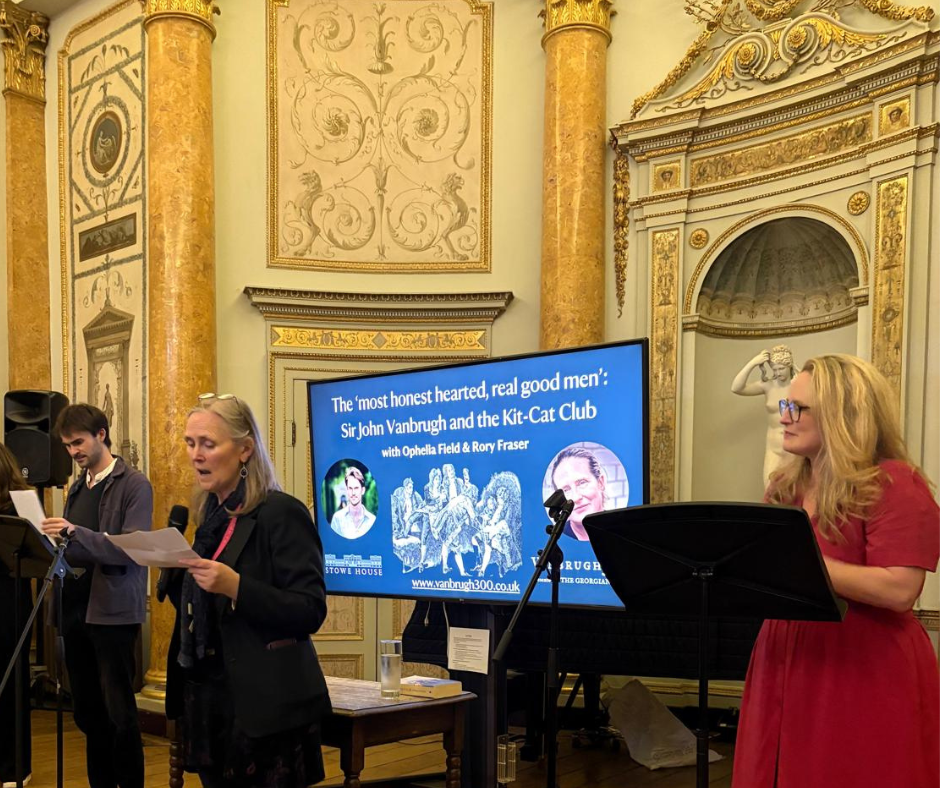
At Stowe House, author Ophelia Field and Vanbrugh biographer Rory Fraser focused on the Kit-Cat Club and its under-appreciated centrality to Vanbrugh’s eclectic career and British culture in their sold out talk. Vanbrugh joined publisher Jacob Tonson’s (1655-1736) Kit-Cat Club soon after his play The Relapse debuted on the London stage in late 1696, remaining a member until the Club dissolved in the 1720s, and retained a deep fondness for its fellowship and friendships until the end of his life. Several key steps in his surprising career depended upon the patronage of aristocratic club members, and this was no accident. Tying the story of the Club’s evolution and Vanbrugh’s involvement over several decades to the Stowe landscape, as developed by Kit-Cat member Richard Temple, 1st Viscount Cobham (1675-1749), this in-conversation event surfaced historical connections, conundrums and heated rivalries.

Castle Howard
Saturday 13 June - Responses to Vanbrugh
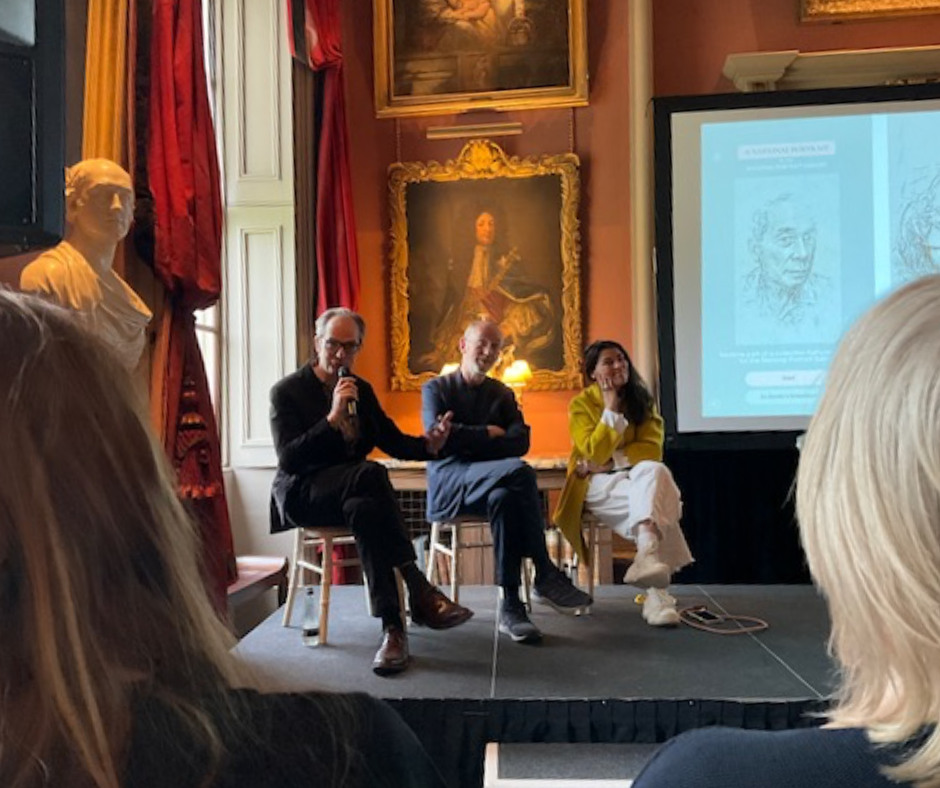
Castle Howard hosted a fascinating panel discussion featuring the Hon. Nick Howard, award-winning artist and designer Es Devlin, and architect Francis Terry, exploring the enduring influence of Sir John Vanbrugh’s vision. Nick Howard reflected on growing up at Castle Howard and how living within one of Vanbrugh’s greatest creations has shaped both his life and his passion for photography, capturing the house and landscape at all hours in an ongoing attempt to better understand the architect behind his family home. Francis Terry spoke about the restoration of the Tapestry Drawing Room following the devastating fire of the 1940s, describing the collaborative process of recreating the space using original designs and tapestries. Es Devlin discussed her new installation, Reflections on Vanbrugh, created for Vanbrugh’s Temple of the Four Winds, sharing the artistic influences behind the work and her desire to encourage visitors to engage with both the installation and Vanbrugh’s legacy in new ways. Together, the speakers offered unique perspectives on how Vanbrugh’s architecture continues to inspire custodians, architects, artists and audiences today.

Kimbolton Castle
Thursday 2 July - Courtier, Playwright and Castle: The Unlikely Making of Kimbolton
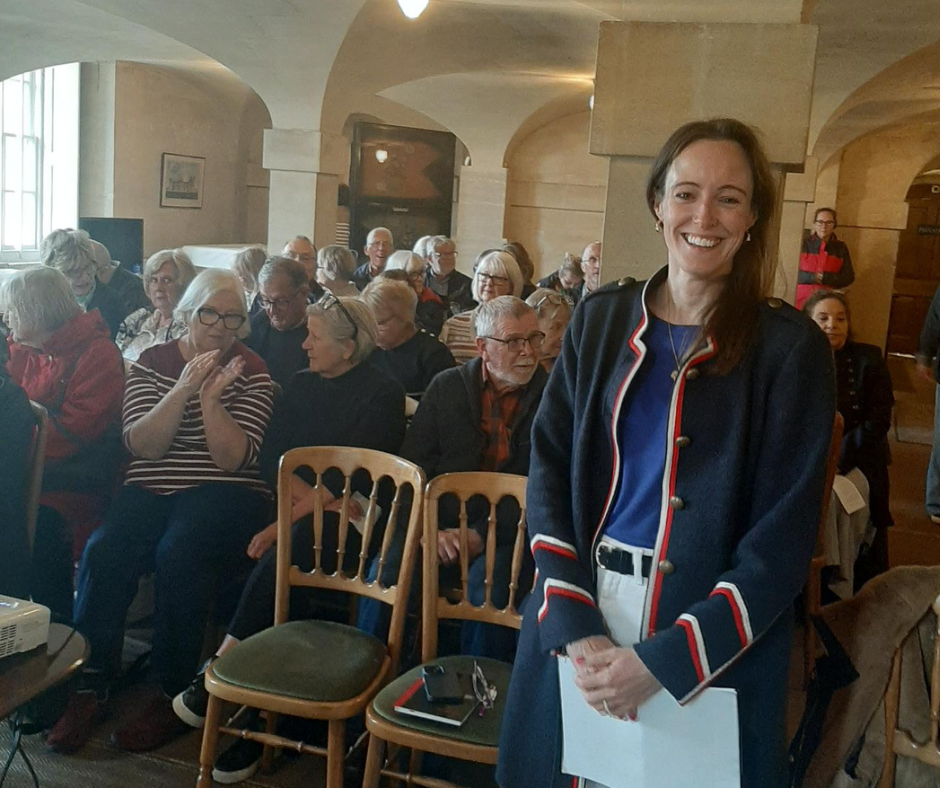
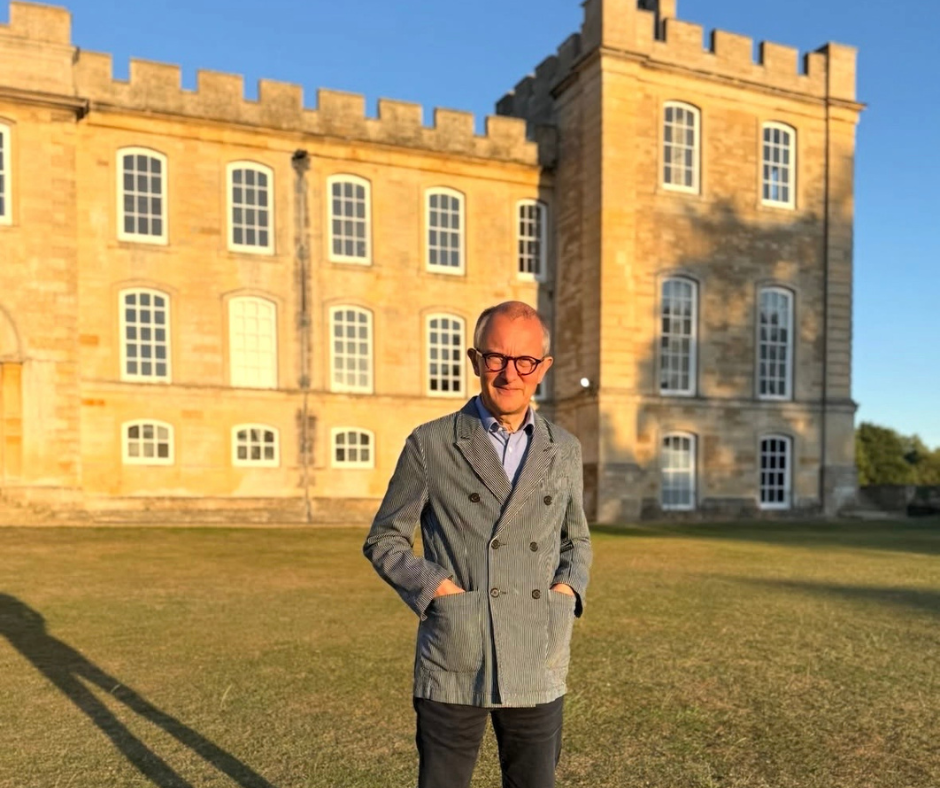
The free Vanbrugh300 lecture at Kimbolton Castle proved to be a memorable evening, with a packed audience, including members of several local historical societies, enjoying a fascinating talk by distinguished architectural historian Simon Thurley. Returning to his alma mater, where his lifelong fascination with the work of John Vanbrugh first began, Simon explored the story of the Castle's remarkable transformation during the Great Rebuilding. He recounted how Charles Edward Montagu commissioned Vanbrugh and his assistant, Nicholas Hawksmoor, to redesign the Castle's impressive South Front, weaving together architecture, history and the personalities behind the project. Drawing on his wealth of expertise, Simon delivered an engaging and insightful lecture that brought Kimbolton's architectural heritage vividly to life.

Seaton Delaval Hall
Thursday 8 October 6:30pm - John Vanbrugh and the Queen’s Theatre in the Haymarket
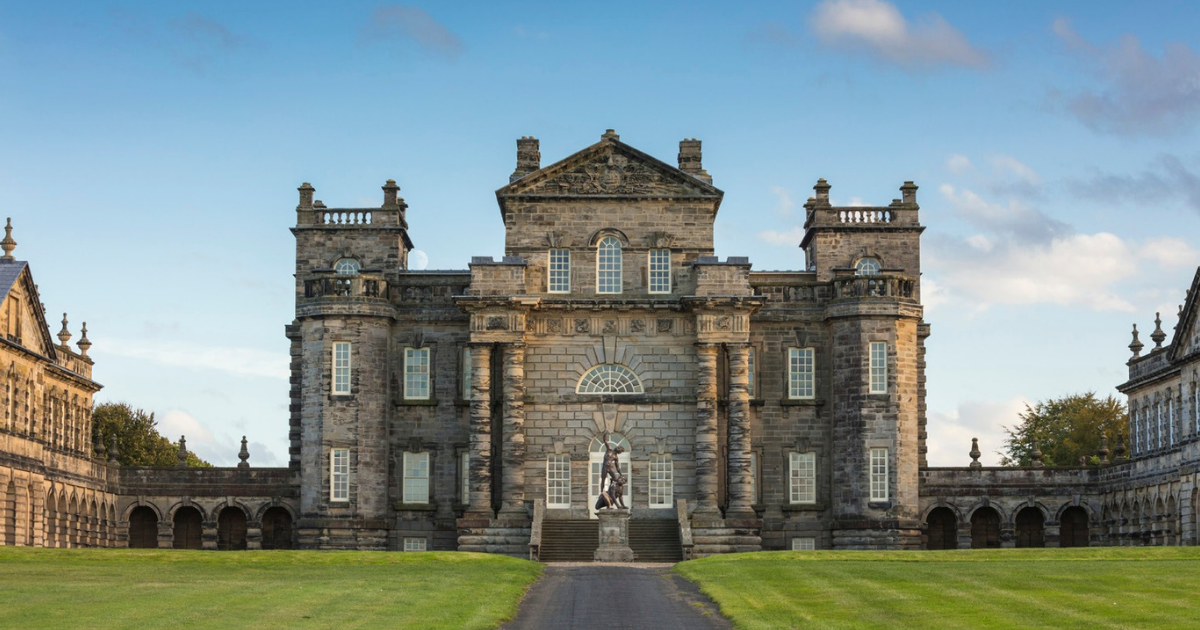
Dr Annette Rubery and Dr Nicolas Helm, experts in the theatre and theatrical architecture of the Restoration period (c.1660-1710), will discuss Sir John Vanbrugh and the Queen's Theatre in the Haymarket, London. When, in the early 1700s, Vanbrugh began making plans for a new London playhouse, he was typically ambitious in his approach: “I have drawn a design for the whole disposition of the inside, very different from any other House in being”, he told his friend Jacob Tonson, the Kit-Cat Club’s secretary. The resulting theatre (unveiled in 1705) sought to combine both dramatic and operatic productions in a visually dynamic setting. However, his project was in many respects a failure, and it was not until the 1720s, after numerous alterations and various attempts at management, did it begin to function effectively.