Using money raised by National Lottery players, The National Lottery Heritage Fund supports projects that connect people and communities with the UK’s heritage. Vanbrugh 300 is made possible with The National Lottery Heritage Fund. Thanks to National Lottery players, we have been able to develop a nationwide project that aims to broaden the awareness of Vanbrugh through special displays, free education programmes and lectures, throughout his tercentenary year in 2026.
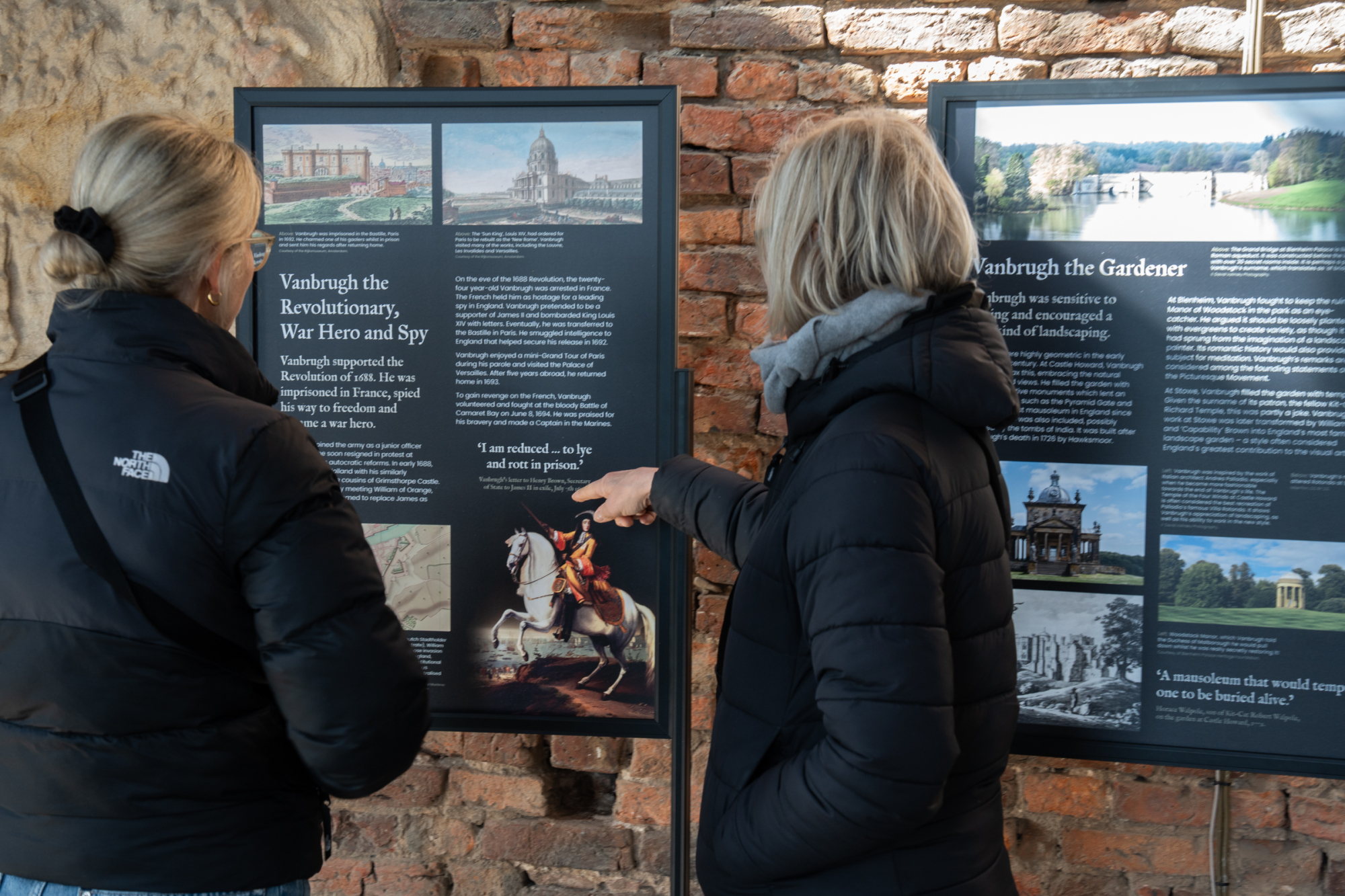
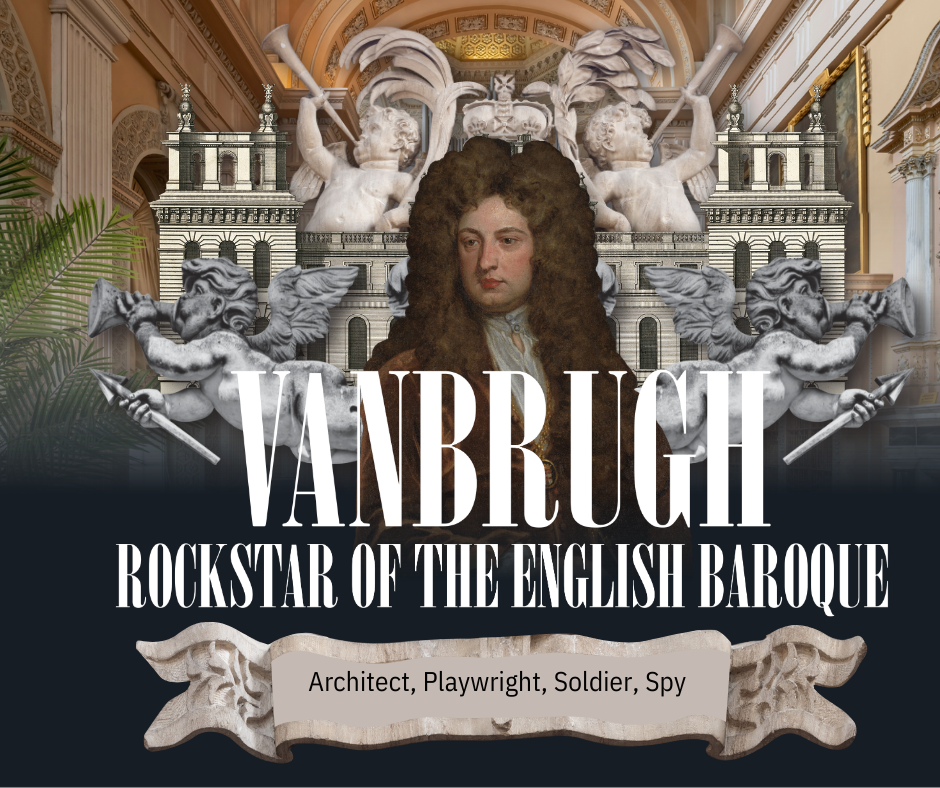
Vanbrugh: Rockstar of the English Baroque was a series of displays that introduced visitors to Sir John Vanbrugh – architect, playwright, soldier, spy.
Each participating venue explored Vanbrugh’s life and work, as well as his relationship with his patron and the buildings he created at that site.
The displays began with his time in India and inside French prisons, where he was imprisoned as a hostage for a leading French spy in England. He would see buildings in both countries that would influence his later architectural achievements. Before then, he was a controversial dramatist and built the Queen’s Theatre in London’s Haymarket. He was invited to join the exclusive Kit-Cat Club, who’s members were mainly Whig politicians, writers and artists. Most of his building commissions would come from his friends and other contacts he made in the club.
Visitors were then introduced to his influences and his work as an architect. His major commissions were Castle Howard, Blenheim Palace, Grimsthorpe and Kimbolton castles, Seaton Delaval Hall and Stowe House. His work would go on to influence architects of the Gothic Revival and landscape designers of the picturesque.
This part of the display was written by historian Rory Fraser. It was illustrated with newly commissioned photographs of the houses, original plans and contemporary paintings and portraits.
Venues
Each venue played a unique role in telling the story of Sir John Vanbrugh, with every house hosting its own distinct part of the display. Across the sites, displays were brought to life through newly commissioned photography, original architectural plans, and a rich selection of contemporary paintings and portraits, offering fresh perspectives on Vanbrugh’s work and legacy.
Funded by The National Lottery Heritage Fund, the Rockstar of the English Baroque display panels were presented by The Georgian Group to each of the partner houses. Blenheim Palace and Castle Howard built on these displays to develop and expand their own exhibitions, further exploring Vanbrugh’s remarkable life and work.
Together, these exhibitions invited you to experience Vanbrugh’s world in different ways at each location.

Blenheim Palace
Blenheim Palace's exhibition Blueprints of Power shined a light on Sir John Vanbrugh’s brilliant mind, his rivalries and ambitions and took visitors on an immersive visual experience through his early life and theatrics as playwright all the way to his high-stakes partnership with Sarah Churchill, first Duchess of Marlborough. Blueprints of Power combined immersive experiences with rare archive material, recognisable outfits and costumes and the dramatic stories behind them. Visitors were able to step back in time and discover how this flamboyant architect’s relationship with high society helped to define an age.
Castle Howard
Celebrating Castle Howard’s beautiful Baroque architecture, Staging the Baroque, curated by architect Roz Barr, explored Sir John Vanbrugh’s visionary use of scale, shadow and light in the creation of one of Britain’s most iconic stately homes. The exhibition traced the moment when an ambitious Vanbrugh with a teeming imagination encountered the equally ambitious Charles Howard, 3rd Earl of Carlisle in the confines of the Kit-Cat Club in London, and was commissioned to design the Earl’s new house. Vanbrugh’s bold, theatrical vision for a grand country mansion was captivating, and inspired Carlisle to take a chance on this would-be architect who had never built anything before, thereby giving rise to the extraordinary Castle Howard. Staging the Baroque combined showstopping architectural models, film and historical storytelling to recount this extraordinary tale of inspirational collaboration.
Seaton Delaval Hall
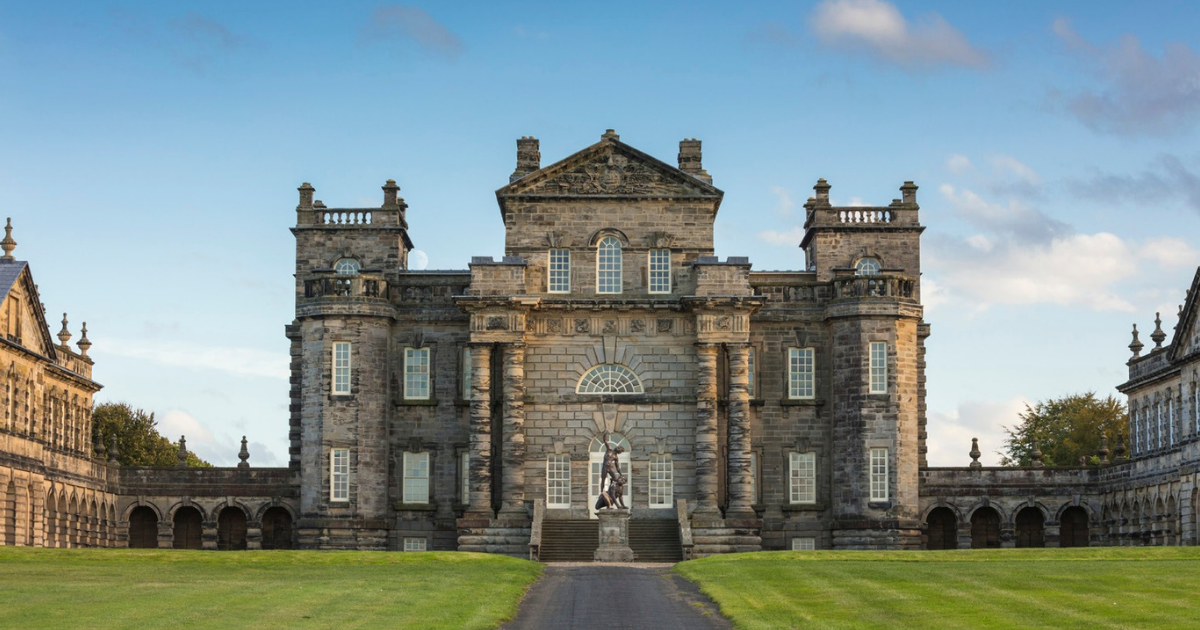
Admiral George Delaval commissioned Vanbrugh to design the hall, which he did by combining elements of his English Baroque with his ‘castle air.’ One of the most striking features, and unique for Vanbrugh, are the oval-shaped spiral staircases that allowed guests to be shown the estate from the roof. Celebrating Seaton Delaval, where volunteers and crafts people have brought it back to life, this exhibition honoured their work as well as that of Vanbrugh.

Grimsthorpe Castle
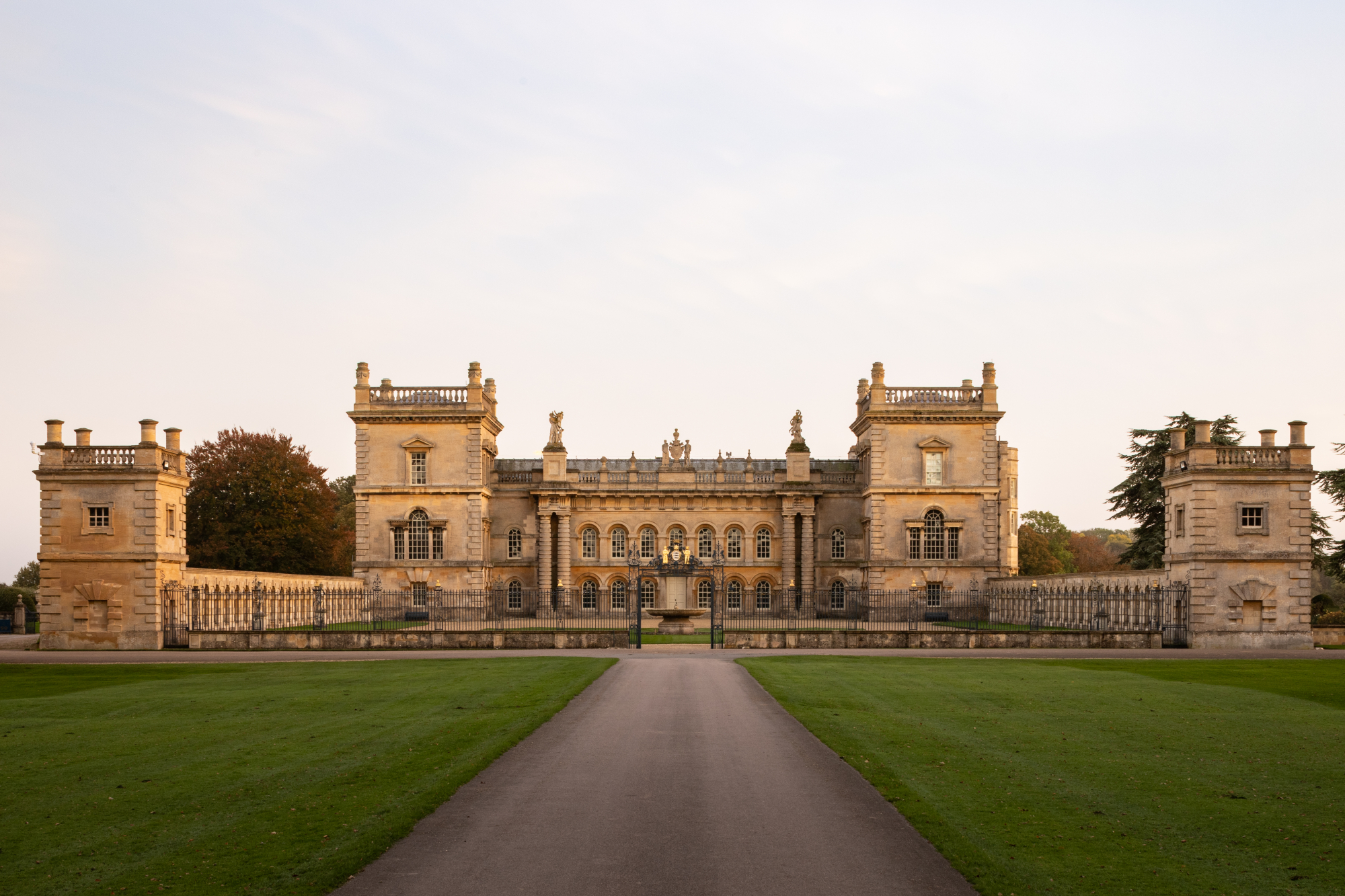
Visitors were invited to discover Vanbrugh’s political relationship to his ‘old friend and ally,’ Robert Bertie, who he travelled with to visit William of Orange in the Netherlands. Bertie commissioned Vanbrugh to redesign Grimsthorpe Castle, where his mature style combined scale and symmetry to convey martial strength. One of Vanbrugh’s last major works, his design promoted the Bertie family’s social standing and Enlightenment learning. The exhibition guided visitors to identify Vanbrugh-designed features in the house.

Stowe House
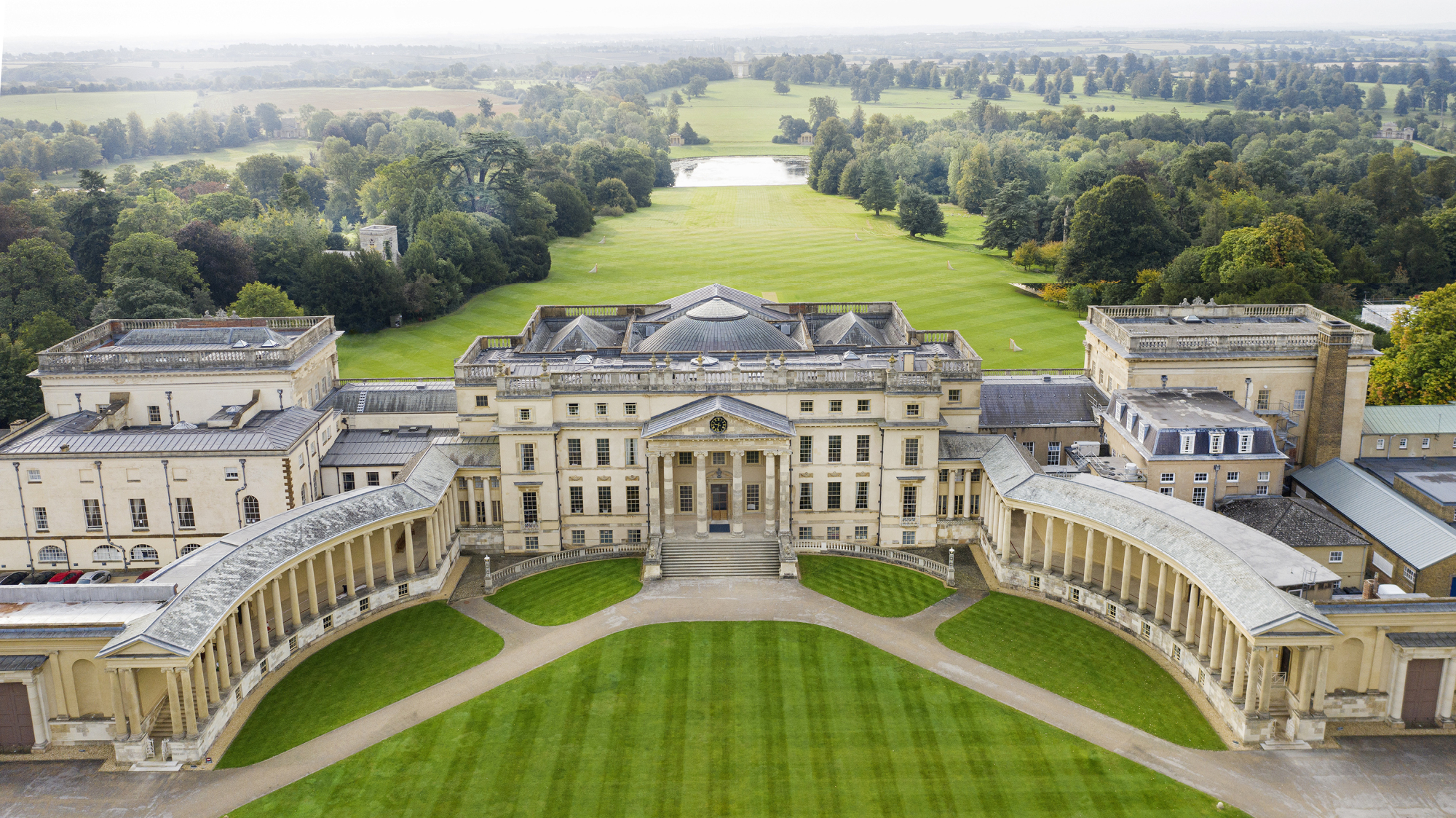
Vanbrugh was commissioned by fellow Kit-Cat Club member, Sir Richard Temple, to work on the house and gardens. The exhibition used many contemporary illustrations to show Vanbrugh’s work, some of which has been replaced or moved. Four of Vanbrugh’s garden buildings and parts of his house survive. He transformed a country manor into one of the great aristocratic seats of the 1700s, while his naturalistic approach in the gardens influenced famous landscape designer ‘Capability’ Brown. The exhibition guided visitors to identify Vanbrugh-designed features in the famous gardens.

Kimbolton Castle
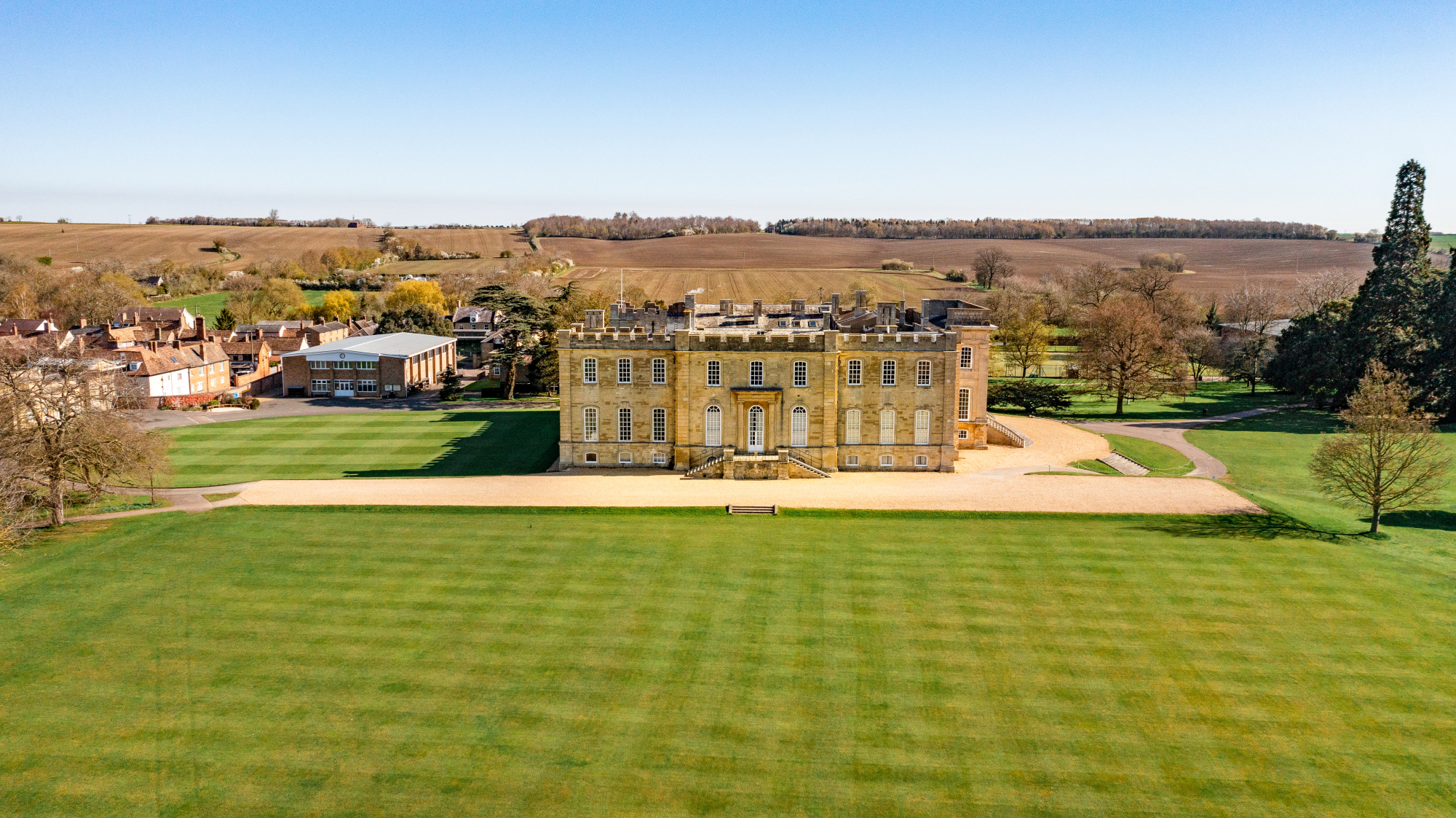
Kimbolton’s Charles Montagu was a close friend of John Vanbrugh and an influential patron of the arts who brought the artist, Pellegrini from Venice to work on his home. You can see the murals painted by Pellegrini in the house today. Vanbrugh was influenced by Kimbolton’s history to design a building with a ‘castle air’ that combined medieval detailing with a symmetrical style. This would go on to influence architects of the Gothic Revival. The exhibition guided visitors to identify Vanbrugh-designed features in the house.